Fire Rebuilds
Rebuilding Altadena, the Palisades, and Malibu.
Alto Builders is the licensed general contractor behind the homes now under construction across the fire-affected communities. Two ways to rebuild, one team that holds the license, manages the trades, pulls the permits, and takes responsibility for the finished home.The licensed general contractor behind homes now under construction across the fire-affected communities.
Rebuilding across three communities.
Altadena, Pacific Palisades, and Malibu, all affected by the January 2025 fires. Each pin marks a home we are rebuilding.
Homes under construction today across Altadena, Pacific Palisades, and Malibu.
Start with your community.
Permits, costs, timelines, and the rules that actually apply where you are rebuilding. Written for homeowners, updated for 2026.
Rebuilding in Altadena
Eaton Fire rebuild guide covering LA County permits, the Altadena plan-check process, costs, and timelines.
Read the Altadena guideRebuilding in Pacific Palisades
Palisades Fire rebuild guide covering LADBS permits, Coastal Zone rules, fire hardening, and what it costs.
Read the Palisades guideRebuilding, day by day.
From the job-site sign to a family's initials set into fresh concrete, these homes are underway right now.
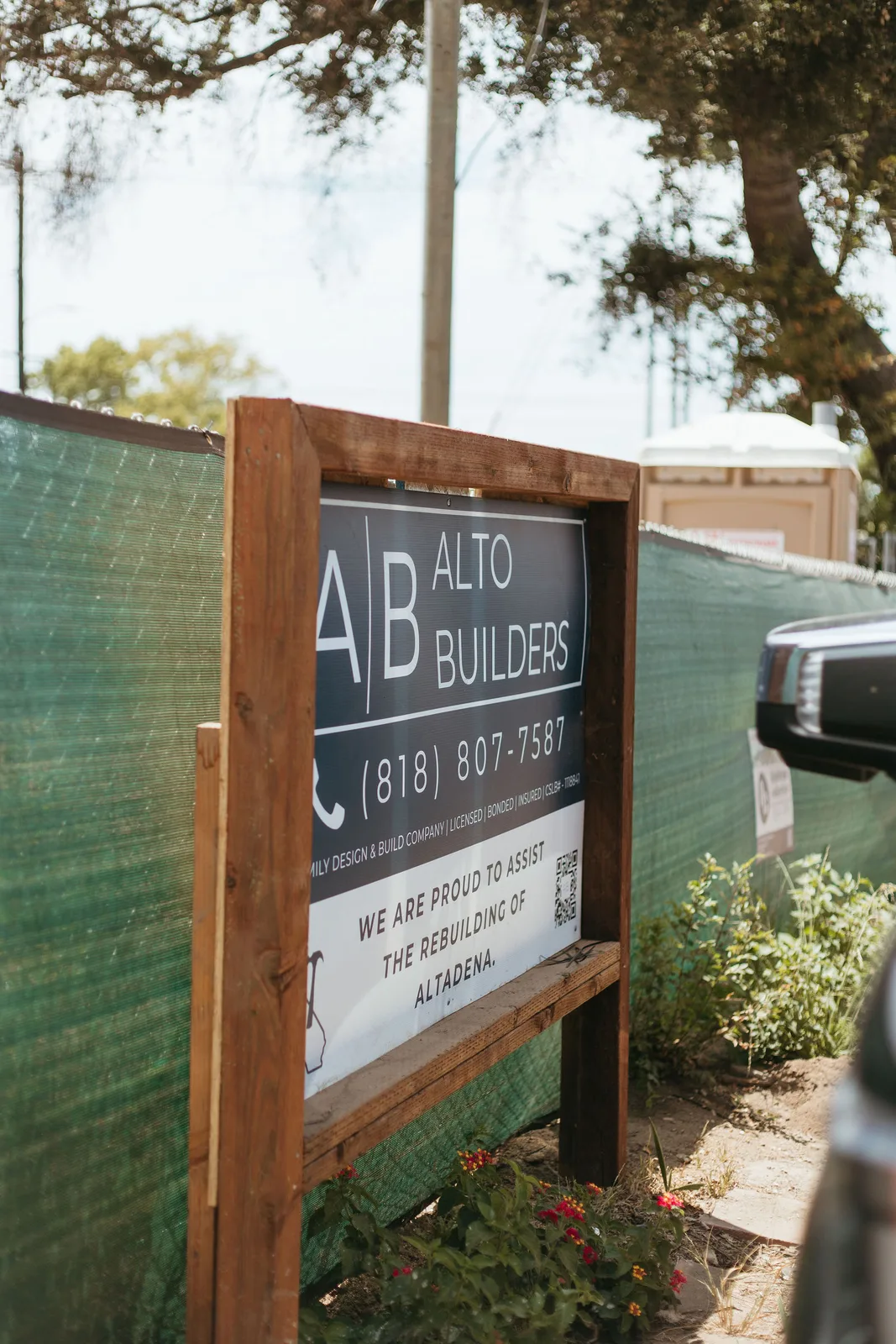
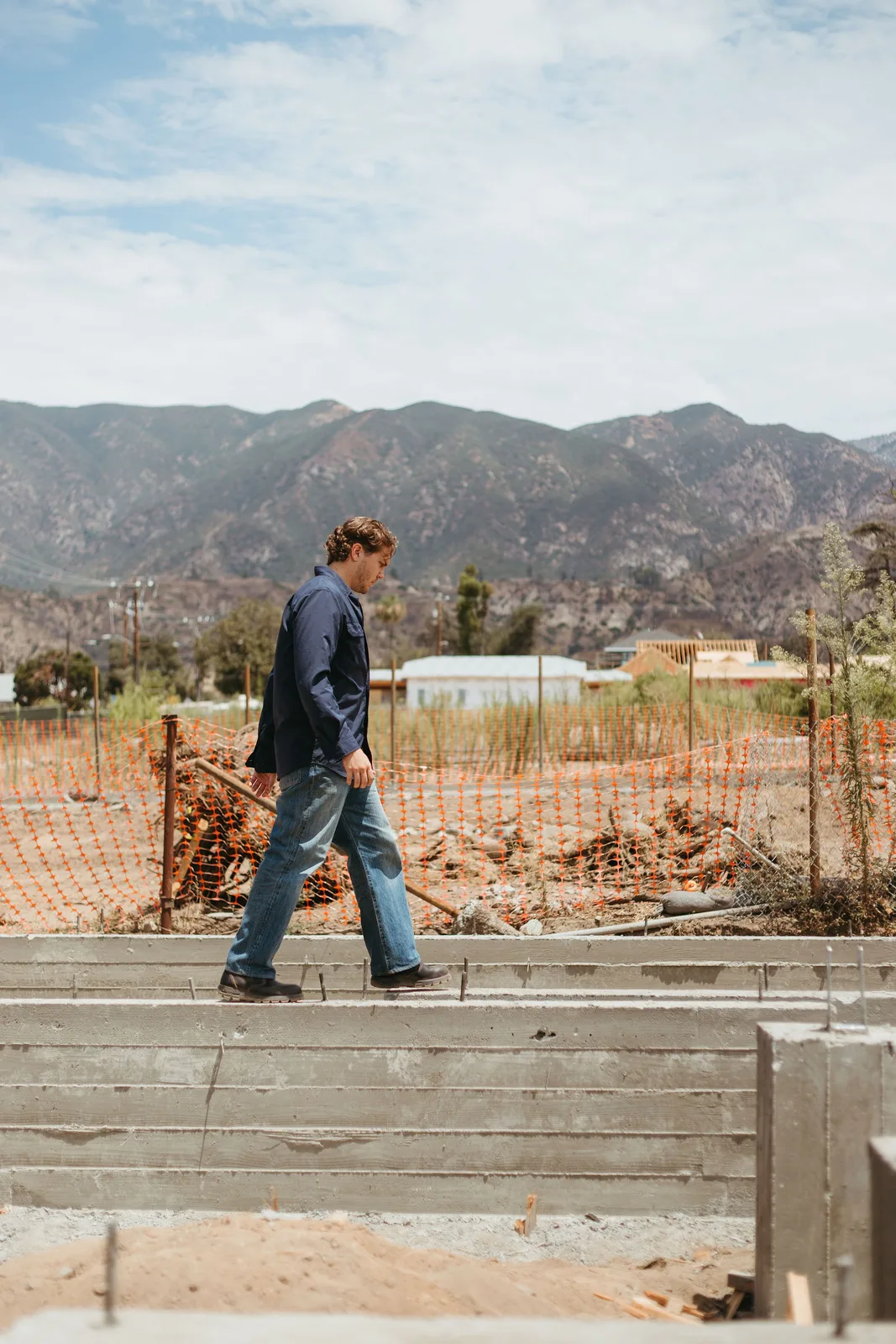
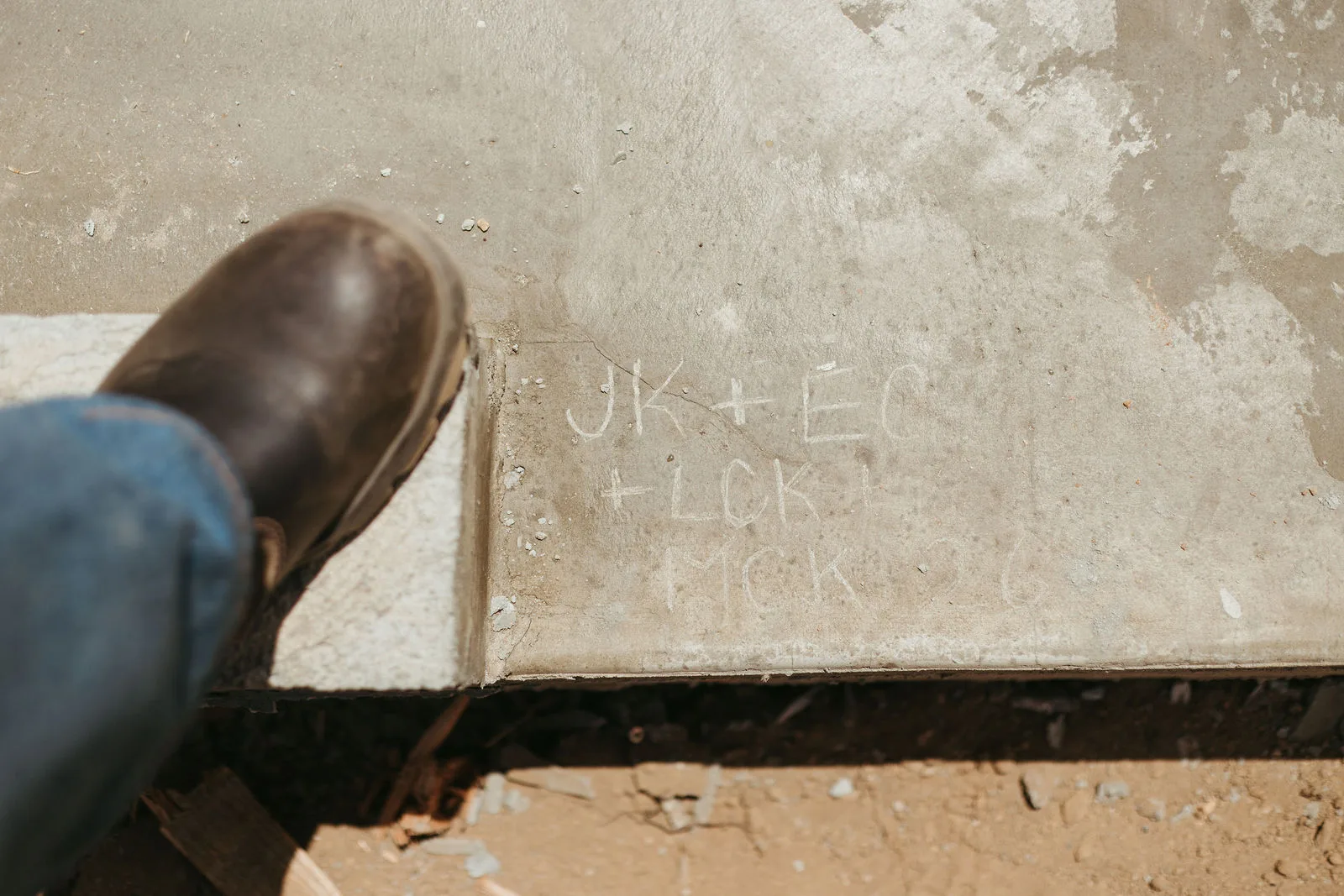
Two Ways to Rebuild with Alto Builders
Wherever you are in the process, whether you have a designer or just a cleared lot, there is a path that fits your situation.
Losing a home to fire is one of the most disorienting experiences a family can go through. The rebuild that follows involves a long sequence of decisions, made while you are still navigating insurance, temporary housing, and grief. Alto Builders is here to reduce that uncertainty, as the licensed general contractor who holds the license, manages the trades, pulls the permits, and takes responsibility for the finished home.
We work with homeowners in two distinct ways. Every path leads to the same outcome: a code-compliant, beautifully built home. The difference is how we get there together.
Design-Build by Alto Builders
Alto handles everything, design, permitting, and construction, under one roof. Lana leads the design vision, working in Chief Architect to develop full 3D renderings so you can see your home before a single board is framed. Paul and Simon manage the build from permit application through final walkthrough.
This is the most streamlined option. One contract, one point of contact, no coordination gap between your designer and your contractor. It suits homeowners who want to move efficiently and trust a single team with the full scope.
- 3D design renderings via Chief Architect. See your home before construction begins
- Permits & engineering managed entirely by Alto
- Construction from foundation to final inspection
- Buildertrend access for real-time schedule and budget visibility throughout
Your Architect or Designer, Our Build
You bring your own architect or interior designer. Alto serves as your build partner, taking their plans and executing them with precision. We build what designers draw.
We collaborate closely with your design team from the start: reviewing drawings for constructability, flagging cost drivers before plan check, and maintaining real-time project transparency through Buildertrend so your architect always knows where the project stands. Alto handles permits, engineering coordination, and all construction.
- Constructability review: we work with your architect before plans go to plan check
- Permitting & engineering coordination managed by Alto
- Buildertrend access for your design team: live schedule, budget, and field updates
- Material & finish coordination aligned with your designer’s specifications
Rebuild Timeline
Regardless of which path you choose, the rebuild follows the same major phases. Engaging Alto early, before debris removal is even complete, is one of the most effective ways to shorten the overall timeline.
-
Document & File Your Insurance Claim Report the loss and work with your insurer to begin the claims process. Request a full scope of loss in writing. Note coverage limits for dwelling, code upgrades, and additional living expenses (ALE).
-
Debris Removal Government-coordinated debris removal programs typically handle hazardous material first (Phase 1), followed by structural debris (Phase 2). Confirm your lot clearance before engaging contractors.
-
Engage Alto Builders Connect with us early, whether you already have a designer, are coming through a collective, or want Alto to handle design as well. We coordinate early-stage feasibility and budgeting before plans are finalized.
-
Plans, Permitting & Approvals Plans are prepared and submitted to the appropriate jurisdiction: LA County for Altadena, City of LA for Pacific Palisades. Fire rebuild streamlining programs have reduced some timelines, but permit review still takes months. We manage this process actively on your behalf.
-
Construction Once permits are in hand, construction begins. We handle all trades: framing, MEP (mechanical, electrical, plumbing), insulation, drywall, finishes, and coordinate inspections through each phase.
-
Final Inspection & Move-In A certificate of occupancy is issued after all inspections pass. We walk the home with you, address any punch-list items, and hand over a home that meets current code and your design intent.
Two Scopes: Like-for-Like vs. Non-Like-for-Like
One of the first decisions you'll face is whether to rebuild your home as it was, a like-for-like rebuild, or make changes to the footprint, layout, or size. This choice applies regardless of which of the three paths above you take. The decision affects your permit timeline, insurance coverage, and overall cost.
| Dimension | Like-for-Like | Non-Like-for-Like |
|---|---|---|
| Definition | Rebuilding to the same footprint, size, and use as the original structure | Any change to size, layout, use, or floor plan from what existed |
| Permit timeline | Faster, streamlined review programs apply in most cases | Longer, full plan check required for modified elements |
| Insurance coverage | Generally fully covered under dwelling replacement cost | Changes beyond original scope typically fall outside dwelling coverage |
| Design flexibility | Limited, must match original configuration | Full. You can redesign layout, add square footage, or change massing |
| Code upgrades | Still required (fire hardening, sprinklers, energy code) | Required plus any triggered by changes (structural, zoning, etc.) |
| Good for | Homeowners who loved their home and want to return quickly | Homeowners who want to improve the home while they're rebuilding anyway |
What Alto Builders Handles on Every Rebuild
Regardless of which path brings you to us, Alto Builders is the licensed general contractor, not a broker, not a coordinator. We hold the license, manage the trades, pull the permits, and take responsibility for the finished home.
- Permitting: We prepare and submit permit applications, respond to plan check comments, and track approvals with LA County or City of LA on your behalf.
- Engineering coordination: We manage structural, soils, and fire protection engineering as required by the jurisdiction.
- Construction management: We self-perform or subcontract all trades and maintain a single point of accountability for schedule, budget, and quality.
- Inspections: We schedule and attend all required city or county inspections through each phase of construction.
- Insurance coordination: We review adjuster scopes, provide itemized counter-estimates, and help close gaps between insurer estimates and actual rebuild costs.
On design-build projects, Lana’s design work in Chief Architect produces detailed 3D renderings that let you see and approve the home before construction starts. On projects where you bring your own design team, we integrate with them through Buildertrend so nothing gets lost between the drawing and the build.
Whether you come to us directly, through NardiHaus, through the Altadena Collective, via Realm, or through Brass-Tacks, the build experience is the same: clear communication, no surprises, and a finished home you’re proud of.
Costs & Insurance
Understanding the financial side of a fire rebuild: what insurance covers, where gaps typically appear, and how to plan accordingly.
Fire rebuild costs in the greater LA area have risen significantly since 2023, driven by labor demand, material costs, and new fire-hardening requirements. The ranges below reflect realistic 2025 to 2026 construction costs for fire-affected neighborhoods, not soft costs like architecture or permits.
Note: Cost per square foot estimates are for construction only and exclude architecture, engineering, permits, debris removal, and landscaping. All figures are approximate and project-specific.
Costs also vary depending on which rebuild path you choose. A design-build engagement with Alto, where design, permitting, and construction are handled under one contract, is typically the most cost-efficient option overall, with no gap between design intent and construction budget. Working with your own architect adds design fees but gives you full creative control and an independent advocate for your vision. Either way, we provide detailed cost clarity before you commit to a scope.
Most homeowner policies include several categories of coverage that apply to fire rebuilds. Understanding each one, and its limits, is critical before you commit to a scope.
- Dwelling replacement cost: The primary coverage for rebuilding the structure. Subject to your policy limit, which may fall short of actual rebuild costs in today's market.
- Code upgrade coverage (Ordinance or Law): Covers the additional cost of bringing the rebuilt home into compliance with current building codes, including fire sprinklers, energy efficiency, and seismic requirements. Limits vary widely by policy; some cap at $50K, others provide 50% of dwelling coverage.
- Additional Living Expenses (ALE): Covers temporary housing, meals, and related costs while your home is being rebuilt. Duration and dollar limits apply.
- Debris removal: Often included separately or as part of dwelling coverage. Government programs may also cover a portion.
Common Coverage Gaps
- Policy limits set years ago that no longer reflect current construction costs
- Insufficient Ordinance or Law coverage to pay for all required code upgrades
- Design and architecture fees not covered as part of dwelling replacement
- Site work, grading, or retaining walls excluded or undercovered
- ALE running out before construction completes
- Non-like-for-like improvements entirely out of pocket
Insurance adjusters produce a scope and estimate using software tools like Xactimate. These estimates often undercount actual construction costs for complex rebuilds or use unit prices that don't reflect current LA-area labor rates.
We review adjuster scopes carefully, provide itemized counter-estimates where appropriate, and work constructively with your insurer to narrow gaps. Our goal is not to inflate claims. It is to ensure the estimate reflects what the rebuild actually requires to be done properly.
We also help identify supplemental claims for items initially excluded, code upgrades not originally priced, and scope changes that emerge during construction.
Fire Hardening
Chapter 7A WUI requirements mandate ignition-resistant materials for roofing, siding, windows, vents, and decking, adding cost beyond a standard rebuild.
Code Upgrades
New construction must meet the 2022 California Residential Code, energy code Title 24, and in most cases includes mandatory fire sprinklers throughout the dwelling.
Material & Labor Demand
High rebuild volumes across Altadena and Palisades simultaneously are putting pressure on trade labor and materials. Early engagement with your contractor helps lock in scheduling.
Site Conditions
Slope, soil conditions, retaining walls, and access to the lot all factor into cost. Hillside lots in Altadena and Palisades can carry meaningful site-work premiums.
Design Choices
Kitchen, bathroom, and finish selections vary widely in cost. We help clients understand trade-offs so budget decisions are made with full information, not after the fact.
Coastal Zone (Palisades)
Pacific Palisades falls within the California Coastal Zone, which adds CEQA and Coastal Commission considerations for certain rebuild configurations. We are familiar with this overlay and factor it into planning early.
When insurance proceeds fall short, which is common, homeowners have several options to bridge the gap:
- Construction loans: Short-term financing that converts to a permanent mortgage once the home is complete. Lenders have offered fire-rebuild-specific programs in affected areas.
- Home equity or personal loans: For smaller gaps, these may be simpler to access than a full construction loan.
- State and local assistance programs: California's Office of Emergency Services and FEMA periodically offer supplemental assistance for disaster-affected homeowners. Eligibility requirements vary.
- SBA disaster loans: Low-interest loans available to homeowners in federally declared disaster areas to cover uninsured losses.
We can help you understand the full cost picture before you commit to a scope, so financing decisions can be made with confidence.
Requirements & Regulations
What your rebuilt home must meet: fire hardening, building code, inspections, and jurisdiction-specific processes for Altadena and Pacific Palisades.
California's Chapter 7A of the Building Standards Code governs construction in Wildland-Urban Interface (WUI) areas, which includes both Altadena and Pacific Palisades. All fire rebuilds in these areas must comply regardless of whether the rebuild is like-for-like.
Chapter 7A requirements cover the following components:
- Roofing: Class A fire-rated roofing assemblies required. Wood shingles are no longer permitted in WUI areas.
- Exterior walls & siding: Ignition-resistant materials required for exterior cladding, eaves, and soffits. Non-combustible or fire-rated assemblies at exterior wall surfaces.
- Windows & glazing: Multi-pane glazing with tempered glass or equivalent required in WUI zones to resist radiant heat and ember intrusion.
- Vents: All foundation, attic, and crawl space vents must be ember-resistant (corrosion-resistant wire mesh at 1/16" or smaller, or approved ember-resistant vent products).
- Decks & under-floor areas: Ignition-resistant decking and skirting materials. Combustible materials stored under decks are a common ignition point and must be addressed in construction.
- Gutters: Noncombustible gutter materials required, or enclosed ember-resistant gutter systems.
All new construction, including fire rebuilds, must comply with the 2022 California Residential Code (CRC), California's adoption of the International Residential Code with state amendments. Key provisions include:
- Energy code (Title 24): Insulation, fenestration, HVAC, and solar requirements apply to new construction. Rebuilt homes must meet 2022 Title 24 standards, which are more stringent than codes in effect when many original homes were built.
- Seismic requirements: Structural systems must comply with current seismic provisions, which may differ significantly from the original construction depending on the home's age.
- Interior fire sprinklers: NFPA 13D residential fire sprinkler systems are required throughout rebuilt homes in most jurisdictions affected by the 2025 fires. This is non-negotiable and must be factored into budget.
- Accessibility: Path-of-travel and accessibility requirements apply where triggered by the scope of work.
Altadena is an unincorporated community administered by LA County, while Pacific Palisades falls within the City of Los Angeles. This difference has meaningful implications for how your rebuild permit is processed.
Altadena: LA County (LADBS)
- Permits processed through LA County Department of Public Works / LADBS county operations
- County has implemented a fire rebuild streamlining program for like-for-like rebuilds
- Separate fire rebuild permit track available for qualifying projects
- No Coastal Zone overlay
- Some properties in the Eaton Fire area may have access to expedited review windows
- Standard LA County inspections apply throughout construction phases
Pacific Palisades: City of LA (LADBS)
- Permits processed through City of LA LADBS
- City has fast-tracked fire rebuild permitting for like-for-like projects
- Coastal Zone overlay applies. Some projects may require California Coastal Commission review or consistency determination
- Hillside construction standards apply to many Palisades parcels
- City of LA fire sprinkler requirements are among the most stringent in the state
- Zoning Ordinance amendments related to fire rebuilds may affect setback and height options
A fire rebuild will typically require inspections at the following phases. We schedule and attend all inspections on your behalf:
- Foundation: Before concrete pour, after formwork and reinforcement are in place
- Framing: After all framing, blocking, and shear panels are installed and before insulation or drywall
- Rough MEP: Rough plumbing, rough electrical, and rough mechanical inspections (may be combined or separate)
- Fire sprinkler rough: Sprinkler piping and heads before concealment
- Insulation: Before drywall installation
- Drywall nailing: Before taping in some jurisdictions
- Final inspection: All trades must be complete before final; leads to certificate of occupancy (C of O)
The California Environmental Quality Act (CEQA) typically requires environmental review for new construction, but fire rebuilds benefit from categorical exemptions that streamline this process. Like-for-like rebuilds in most fire-affected areas are exempt from CEQA review, which removes a significant potential delay from the permitting path. Non-like-for-like projects may still qualify for CEQA exemptions depending on the scope and location, particularly in the Coastal Zone, where coordination with the California Coastal Commission may be required regardless of CEQA status.
We identify applicable exemptions during the pre-permit phase so there are no surprises mid-process.
All rebuilt single-family homes in Altadena and Pacific Palisades are required to include a residential fire sprinkler system (NFPA 13D). This is not optional. It applies to both like-for-like and non-like-for-like rebuilds.
The sprinkler system must be designed and installed by a licensed fire protection contractor and inspected separately by the fire department. We coordinate with our fire protection subcontractor from the design phase forward to ensure the system integrates cleanly with the ceiling and wall layout.
Budget: sprinkler systems for single-family homes typically run $15,000 to $40,000+ depending on square footage and complexity. This should be included in your insurance scope if it is not already.
Our Partners
Alto Builders works within a broader ecosystem of architecture firms, community collectives, and homeowner platforms that are already embedded in Altadena and Pacific Palisades. Wherever you enter the rebuild process, we know how to work with the people around you.
Architect Collectives
These organizations bring design expertise and community coordination together. When they design, Alto builds.
NardiHaus
NardiHaus is a residential architecture firm based in LA/Pasadena, led by Chris Driscoll. They are part of the Altadena Collective and specialize in residential design, ADUs, fire-resilient construction, and historic preservation. NardiHaus works collaboratively with Janes Cottage Rebuild, Foothill Catalog, LA County, and Altagether, making them one of the most deeply embedded design practices in the Altadena rebuild ecosystem. We work with NardiHaus as their build partner: they lead the design vision, Alto executes it with precision on site.
Altadena Collective
The Altadena Collective is a community-centered rebuild network that coordinates resources across the affected community, helping homeowners navigate insurance, temporary housing, and contractor selection without feeling alone in the process. The Collective connects homeowners with vetted professionals across the rebuild journey, from architects and engineers to builders. Alto Builders is a vetted build partner within the Collective’s network, and we are proud to serve the households they refer.
Rebuild Platforms
These platforms help homeowners find and vet contractors. Homeowners who discover Alto through these channels receive the same full-service build experience as those who come to us directly.
Realm
Realm is a homeowner-facing platform that connects property owners with vetted contractors. Realm provides homeowners with market data, contractor matching, and project tracking tools so they can make informed decisions about their rebuild. Alto Builders is a Realm partner contractor. Our track record, licensing, and insurance meet Realm’s qualification standards. If you found us through Realm, you can trust that vetting has already happened.
Brass-Tacks
Brass-Tacks specializes in rebuild project coordination and competitive bidding, helping homeowners organize their scope, structure bid requests, and manage the early-stage complexity of engaging a contractor. They bring order to a process that can feel overwhelming. We welcome projects that come through Brass-Tacks and work collaboratively within their coordination framework from day one.
Your Designer
Many homeowners come to us with an architect or interior designer already engaged, or they want to choose their own. In those cases, Alto steps in as the build partner: we take the plans and execute them faithfully, without surprises.
We work alongside design professionals in the following ways:
- Early-stage constructability review: We review design intent and preliminary drawings to flag cost drivers or constructability issues before plans go into plan check.
- Detailed scope development: We develop line-item construction scopes aligned with the architect’s drawings, giving designers and homeowners cost clarity at each decision point.
- Permitting & engineering coordination: Alto manages permit submissions, plan check responses, and all engineering coordination, so the design team can focus on design.
- Buildertrend project tracking: Architects and designers get real-time access to the construction schedule, budget, and field updates. The design vision doesn’t get lost between the drawing and the build.
- Material & finish coordination: We work with interior designers on material specifications, lead times, and installation sequencing to keep finish schedules aligned with construction.
For Design Professionals
If you are an architect or interior designer looking for a build partner for fire rebuild projects in Altadena or Pacific Palisades, we’d love to talk. We are experienced in LA County and City of LA fire rebuild processes, and we are known for executing design intent faithfully and without surprises.
Frequently Asked Questions
The typical timeline from permit application to certificate of occupancy is 12 to 18 months, though individual projects can fall outside that range in either direction. Permitting is often the longest single phase. LA County and City of LA have both implemented expedited review programs for fire rebuilds, but plan check still takes time, especially for non-like-for-like projects with significant design changes.
Construction itself, once permitted, typically takes 6 to 10 months for a single-family home depending on size, complexity, and trade availability. Engaging your contractor and architect early, before debris removal is even complete, is one of the most effective ways to shorten the overall timeline, since plans can be developed in parallel with the permitting queue.
A like-for-like rebuild means reconstructing your home to the same square footage, footprint, configuration, and use as the original structure. It does not mean identical materials or finishes. You can upgrade those, but the overall size and layout must match.
A non-like-for-like rebuild involves any change from the original: adding square footage, changing the floor plan, converting spaces to different uses, or altering the massing. Non-like-for-like projects take longer to permit and may not be fully covered by your dwelling insurance, but they offer the opportunity to meaningfully improve the home. Many homeowners, particularly those who had older homes or layouts that no longer suited their family, choose this path.
For many homeowners, insurance does not fully cover the cost of rebuilding, particularly given the increase in construction costs since most policies were written. Common shortfalls occur when dwelling coverage limits were not updated to reflect current replacement costs, when Ordinance or Law (code upgrade) coverage is insufficient, or when policies exclude items like architecture, permit fees, or certain site conditions.
We strongly recommend requesting a detailed scope of loss and a line-item estimate from your insurer early in the process. We can review that estimate alongside our own and help identify gaps that may support a supplemental claim. Working with a public adjuster can also be beneficial if the discrepancy between insurer estimates and actual costs is significant.
Yes. All rebuilt single-family homes in Altadena and Pacific Palisades are required to include a residential fire sprinkler system compliant with NFPA 13D. This applies regardless of whether the rebuild is like-for-like and regardless of whether the original home had sprinklers.
The sprinkler system must be designed by a licensed fire protection engineer or contractor and inspected by the local fire department separately from the building permit inspections. Budget between $15,000 and $40,000 or more for a residential sprinkler system, depending on square footage. This cost should be included in your Ordinance or Law insurance claim if it is not already reflected in your adjuster's scope.
Yes, this is called a non-like-for-like rebuild. You can move walls, reconfigure rooms, change the layout of kitchens and bathrooms, or alter the flow of the home significantly. If you are rebuilding anyway, many homeowners find it is worth addressing design shortcomings that existed in the original home.
The trade-off is that non-like-for-like projects require full plan check review of the changed elements, which adds time to the permitting process. Changes that affect the building footprint, total square footage, or structure will also trigger additional engineering. We work with your architect to identify which changes are worth the added permitting complexity and which can be achieved within a like-for-like framework.
Chapter 7A is the section of the California Building Standards Code that governs construction in Wildland-Urban Interface (WUI) zones: areas where development and wildland fire hazard meet. Both Altadena and Pacific Palisades fall within WUI zones.
Chapter 7A requires that homes in these areas be built with ignition-resistant materials and assemblies at specific components: the roof, exterior walls, eaves, soffits, windows, vents, decks, and gutters. The intent is to reduce the likelihood that embers or radiant heat from a wildfire can ignite the structure. All fire rebuilds in these areas must comply with current Chapter 7A standards, regardless of what the original home was built with. We specify and source all Chapter 7A-compliant materials and manage the inspection of these assemblies.
The best first step is a conversation, and you can come to us from any starting point. There are two paths to rebuilding with Alto Builders:
Path 1, Design-Build: Alto handles everything, from 3D design renderings through construction. Ideal if you want a single team and a streamlined process. Lana leads design; Paul and Simon manage the build.
Path 2, Your Architect or Designer: You bring your own design professional and Alto serves as the build partner. We take their plans and execute them precisely, handling all permits, engineering, and construction.
In any case, reach out to schedule an initial consultation. We will discuss your situation, your insurance coverage, your timeline, and which path makes the most sense for you, before you make any commitments. Call us at 818-807-7587 or use the button below.
Ready to Rebuild?
The path from loss to a finished home is long, but it starts with a single conversation. We are here to help you understand your options, make informed decisions, and build something that will last.